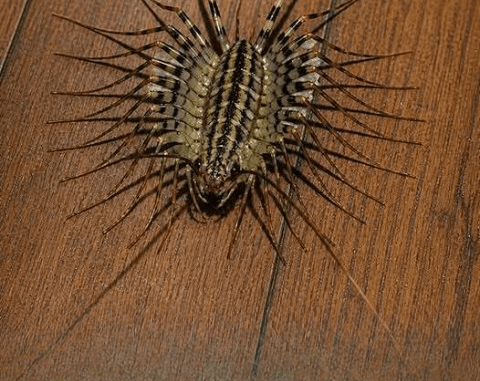
House centipedes are often among the most surprising and unsettling creatures people encounter indoors, especially when spotted moving swiftly across floors or walls during the nighttime. Their numerous legs and rapid movements can be startling at first glance, triggering an instinctive fear. However, a closer examination of their habits and ecological role reveals that these arthropods serve a valuable function within many households.
The Appearance and Behavior of House Centipedes
House centipedes (Scutigera coleoptrata) are easily recognizable by their elongated, segmented bodies, often striped with shades of gray, brown, or yellow. They possess an impressive number of long, delicate legs—typically 15 pairs—that enable them to move with remarkable speed and agility. This rapid motion is quite distinct from the slower, more deliberate crawling seen in many other common household insects.
Their antennae are long and sensitive, helping them detect prey and navigate their environment, especially in dimly lit or dark spaces. House centipedes are primarily nocturnal hunters, which explains their frequent appearances during nighttime hours when other insects become more active.
Preferred Habitats Within Homes
These arthropods tend to inhabit moist, secluded areas of the home where humidity levels are higher, and prey is abundant. Bathrooms, basements, laundry rooms, crawl spaces, and storage areas are common habitats because these environments provide shelter and access to smaller insects that house centipedes feed upon.
Despite their somewhat eerie appearance, house centipedes generally avoid human contact and prefer to remain hidden. They do not establish nests or colonies indoors but instead move around in search of food sources.
Diet and Ecological Importance
The diet of house centipedes consists mainly of small arthropods and insects that can be considered pests, including cockroaches, silverfish, ants, spiders, termites, bed bugs, and moths. This predatory behavior positions house centipedes as natural pest controllers, helping to keep populations of these potentially damaging or nuisance insects in check.
Their hunting technique involves using their speed and long legs to chase down prey. They also possess venom glands that produce toxins effective at immobilizing small insects, though these venoms are not harmful to humans in normal circumstances.
Safety Around Humans
While house centipedes are venomous in the sense that they produce toxins to subdue prey, their venom poses minimal risk to people. They rarely bite humans; when they do, the bite is usually only mildly irritating, similar to a minor insect sting, and typically does not require medical treatment.
Their instinct when confronted by humans is to flee rather than attack, making them more likely to retreat than to engage.
Common Misconceptions and Human Reactions
The unsettling speed, numerous legs, and sudden appearance of house centipedes often lead to misconceptions about their danger or intent. Many people immediately perceive them as harmful pests to be eliminated, but this view overlooks their beneficial role.
Fear responses are natural and understandable, especially given the unusual appearance of these creatures. However, recognizing their ecological function can help ease apprehension.
Management and Prevention Strategies
For homeowners who prefer not to share their living spaces with house centipedes, several management tactics can reduce their presence. Since centipedes are attracted to moisture and prey availability, controlling humidity levels and reducing other insect populations can make homes less hospitable to them.
Sealing cracks, repairing leaks, improving ventilation, and maintaining cleanliness are effective preventive measures. Additionally, gently capturing and releasing centipedes outdoors is an option for those who wish to avoid killing them.
The Role of House Centipedes in Integrated Pest Management
In ecological and pest management contexts, house centipedes are often considered beneficial allies. By naturally suppressing populations of more destructive or invasive insects, they contribute to a balanced indoor ecosystem.
Their presence can sometimes indicate an underlying pest issue, signaling the need for broader pest control efforts targeting the root causes rather than solely focusing on the centipedes themselves.
Appreciating Nature’s Complexity Within Homes
Encountering a house centipede can be a moment of surprise or discomfort, but it also offers an opportunity to understand the complexity of ecosystems that exist even within human dwellings. These arthropods exemplify how nature adapts and functions in unexpected places, often providing services that go unnoticed.
Recognizing the value of house centipedes can shift perspectives from fear to respect for the intricate balance that supports healthy living environments.
Final Thoughts
While the initial reaction to a house centipede darting across a floor might be alarm, learning about their behavior and benefits can transform that fear into curiosity or acceptance. They are not invaders but rather part of a natural system that helps control other pests quietly and efficiently.
For those sharing their homes with these many-legged hunters, understanding their role can ease concerns and promote coexistence, highlighting the importance of informed approaches to pest management and indoor ecology.
House Centipedes in Cultural and Historical Context
Throughout history, various cultures have encountered and interpreted house centipedes in different ways, often influenced by their appearance and behaviors. In some traditions, these multi-legged creatures have been associated with superstition or folklore, sometimes viewed as omens or symbols of protection due to their pest-controlling habits. In other contexts, their unusual form has inspired curiosity and even fascination among naturalists and entomologists.
Understanding these cultural perspectives can provide insight into human attitudes toward insects and arthropods more broadly. It also highlights how perceptions of creatures like house centipedes are shaped not only by their biological traits but also by societal narratives and experiences.
The Biology and Physiology of House Centipedes
Delving deeper into the biology of house centipedes reveals remarkable adaptations that enable their lifestyle. Their body is divided into numerous segments, each supporting a pair of legs, which collectively contribute to their swift and agile movements. These legs are not only numerous but also highly sensitive, assisting in detecting vibrations and movements in their environment.
Their compound eyes and long antennae provide sophisticated sensory input, essential for nocturnal hunting. Additionally, the venom glands connected to their forcipules (modified front legs) allow them to inject venom into prey efficiently. The venom primarily targets the nervous systems of small arthropods, facilitating quick immobilization.
Such physiological features underscore the evolutionary specialization of house centipedes as effective predators within their ecological niche.
Interactions With Other Household Creatures
House centipedes do not exist in isolation within the home environment; rather, they interact with a variety of other organisms. Their role as predators impacts the population dynamics of other insects, potentially influencing the overall biodiversity within indoor spaces.
Moreover, their presence can indirectly affect human comfort and health by limiting populations of pests that may cause damage or transmit allergens. However, it is worth noting that house centipedes themselves are not vectors of disease and do not contribute to contamination.
Scientific Research and Studies on House Centipedes
Research on house centipedes has contributed to broader understanding in fields such as entomology, ecology, and pest management. Studies often focus on their behavior, venom composition, and potential applications in natural pest control strategies.
For example, investigations into their hunting efficiency and prey selection help clarify their impact on household pest populations. Additionally, examining their venom provides insights into arthropod toxin evolution and potential biomedical applications.
Such scientific endeavors illustrate the value of studying even less conspicuous creatures to uncover complex biological and ecological phenomena.
Environmental Factors Influencing House Centipede Populations
Several environmental factors affect the presence and abundance of house centipedes indoors. Humidity is a primary driver since these arthropods require moist conditions to survive and hunt effectively. Temperature also plays a role, as they are more active within certain thermal ranges.
Human behaviors, such as water usage, ventilation practices, and cleanliness, can create microhabitats favorable or unfavorable to house centipedes. Seasonal changes may influence their visibility, with increased activity or indoor movement observed during cooler months when outdoor conditions become less hospitable.
Understanding these factors can assist homeowners and pest management professionals in predicting and managing house centipede occurrences.
Ethical Considerations in Managing House Centipedes
When deciding how to address house centipede encounters, ethical considerations come into play, especially regarding pest control methods. Given their beneficial role and minimal threat to humans, many advocate for non-lethal management approaches.
These include habitat modification to reduce moisture and prey availability, physical removal and relocation, and minimizing the use of chemical pesticides that may harm non-target organisms or contribute to environmental contamination.
Such practices align with integrated pest management principles, emphasizing ecological balance and responsible stewardship of indoor environments.
Tips for Homeowners: Coexisting With House Centipedes
For those willing to coexist with house centipedes, several practical tips can enhance comfort and reduce unwanted surprises:
- Maintain low indoor humidity by using dehumidifiers and ensuring proper ventilation.
- Regularly inspect and seal cracks or gaps in walls, doors, and windows to limit entry points.
- Keep living spaces clean and free of food debris that attract other insects.
- Use natural deterrents, such as essential oils, cautiously and with awareness of their effects.
- If necessary, capture centipedes gently using a container and release them outdoors away from the home.
These strategies promote a balanced approach that respects the ecological role of house centipedes while addressing homeowner preferences.
The Broader Implications for Urban Biodiversity
House centipedes exemplify how urban and indoor environments support diverse biological communities. Recognizing their presence contributes to a broader appreciation of urban biodiversity and the complex interactions that sustain it.
This perspective encourages urban residents to consider the ecological significance of often overlooked creatures and to foster coexistence rather than conflict. Such shifts in mindset can enhance environmental awareness and support sustainable living practices.
Future Directions in Understanding House Centipedes
Continued research and public education about house centipedes can further demystify these creatures and promote informed decision-making. Advances in technology, such as high-resolution imaging and genetic analysis, may reveal new aspects of their biology and behavior.
Additionally, integrating citizen science initiatives can engage the public in monitoring and studying house centipedes, contributing valuable data and fostering community involvement.
By building knowledge and understanding, society can better appreciate the nuanced roles of all organisms sharing human habitats.
Summary
House centipedes, despite their startling appearance and rapid movements, play a vital role as natural pest controllers within homes. Their biological adaptations, ecological interactions, and beneficial predatory behavior highlight their importance in maintaining indoor environmental balance. Recognizing the cultural, ethical, and environmental contexts surrounding house centipedes supports a more nuanced and respectful approach to managing their presence.
Homeowners and pest management professionals alike can benefit from embracing strategies that prioritize coexistence and ecological health, transforming initial fear into informed appreciation.
House Centipedes and Human Psychological Responses
The human reaction to house centipedes is deeply rooted in psychological and evolutionary factors. The creature’s many legs, rapid movements, and sudden appearances can trigger a startle response or even phobias related to insects and arthropods. This phenomenon is part of what psychologists call “biological preparedness,” where humans have evolved to instinctively react to certain visual cues associated with potential threats. Understanding that this response is natural can help individuals manage their reactions and foster a more rational perspective on these creatures.
Educational Outreach and Public Awareness
Increasing public knowledge about house centipedes through educational outreach can reduce unwarranted fear and promote coexistence. Community programs, informational brochures, and online resources prepared by entomologists and pest management experts serve to dispel myths and emphasize the ecological benefits of these arthropods. Such initiatives also encourage responsible pest management practices, reducing unnecessary pesticide use and promoting environmentally friendly solutions.
The Role of House Centipedes in Scientific Education
House centipedes serve as effective teaching subjects in biology and entomology due to their distinctive morphology and behavior. Their segmented bodies, multiple legs, and predatory habits provide tangible examples of arthropod anatomy and adaptation. Educational institutions often use them to illustrate concepts such as predator-prey dynamics, nocturnal behavior, and venom mechanisms. This exposure helps cultivate scientific curiosity and appreciation for biodiversity among students and the general public.
House Centipedes in the Context of Indoor Ecology
Indoor environments represent a unique ecological niche where various organisms interact, often unnoticed. House centipedes contribute to this delicate balance by regulating populations of smaller arthropods. Their presence indicates an active and functioning indoor ecosystem, albeit one influenced by human habitation. Recognizing homes as ecosystems can shift perspectives toward more sustainable and thoughtful management of indoor biodiversity.
Technological Advances in Monitoring and Research
Modern technology has enhanced the ability to study house centipedes in detail. High-speed videography captures their rapid movements, while molecular techniques allow for genetic analyses that clarify their evolutionary relationships. Environmental sensors help correlate centipede activity with humidity, temperature, and prey availability. These tools improve understanding of their biology and inform integrated pest management strategies.
Community Science and Citizen Engagement
Citizen science projects invite homeowners and enthusiasts to document house centipede sightings, contributing valuable data on distribution, behavior, and seasonal patterns. Participating in such efforts fosters community engagement with local biodiversity and promotes informed attitudes toward arthropods. This collaboration between scientists and the public enhances research quality and broadens awareness of the ecological roles played by often-overlooked species.
Long-Term Perspectives and Conservation Considerations
While house centipedes are common and not currently at risk, their role in indoor ecosystems raises broader questions about biodiversity conservation in urban settings. Preserving a diversity of species within human environments supports ecological resilience and sustainability. Encouraging coexistence with beneficial organisms like house centipedes aligns with conservation goals that extend beyond natural habitats into the spaces where people live and work.
Summary Takeaways for Readers
Encountering a house centipede can be unsettling, but understanding their biology, behavior, and ecological contributions can transform fear into appreciation. These arthropods are natural pest controllers that help maintain indoor ecological balance. By adopting informed management practices and embracing a mindset of coexistence, homeowners can benefit from the unseen services these creatures provide. Continued education and research will further illuminate their fascinating roles and encourage respectful interactions within our shared environments.