Before the advent of modern refrigeration and electric coolers, communities living near rivers developed ingenious methods to keep their freshly caught fish alive and fresh for extended periods. One such method involved the use of wooden fish keepers—specialized containers strategically placed in flowing water to leverage natural currents for fish preservation. This practice highlights a fascinating example of human resourcefulness, blending craftsmanship with an understanding of natural environments.
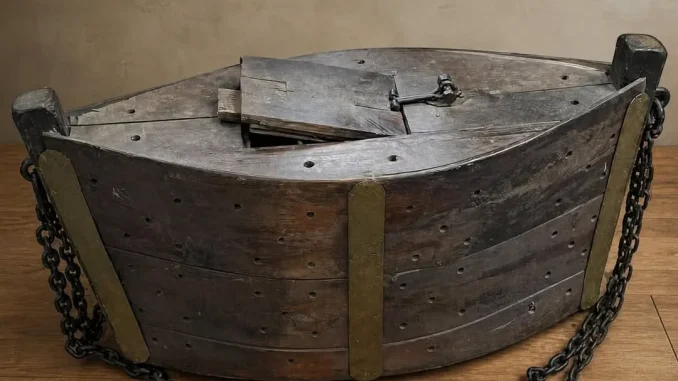
The wooden fish keeper, often curved and constructed from slatted wood, was designed to be submerged partially or fully in a riverbed. Its slatted design allowed fresh, oxygen-rich water to flow through continuously, creating an environment where fish could remain alive outside of their natural habitat for several days. This method effectively turned sections of rivers into living refrigeration units, long before electrical appliances existed.
These keepers were secured with sturdy iron bands and heavy chains to prevent loss or theft. The chains also ensured the keeper stayed anchored during floods or high water currents, protecting the valuable catch from being washed away or taken by animals such as foxes. The hinged lids, sometimes locked, provided an added layer of security, safeguarding the fish from both natural predators and human interference.
Communities that relied on fishing for sustenance or trade depended heavily on these devices. They were not mere containers but vital tools that directly impacted food security and economic stability. The craftsmanship involved reflected a deep knowledge of local river conditions, seasonal changes, and fish behavior, demonstrating a sophisticated understanding of ecology and resource management.
The use of wooden fish keepers also illustrates a broader historical relationship between humans and their natural surroundings. Societies adapted their technologies to work in harmony with the environment, using renewable materials and natural processes to meet their needs. This contrasts with many modern methods that often rely on energy-intensive technologies.
Today, wooden fish keepers are rarely used in everyday fishing but remain an important part of cultural heritage in many regions. They can be found preserved in museums or as artifacts in rural areas, serving as reminders of past ingenuity. Their design principles continue to inspire sustainable approaches to food preservation and cold storage, particularly in areas where electricity is scarce or unreliable.
Studying these traditional preservation methods provides valuable insights into how earlier generations overcame challenges with limited resources. It also encourages contemporary readers to appreciate the balance between innovation and sustainability. By learning from such historical practices, modern societies can explore alternative ways to reduce energy consumption and waste in food storage.
In summary, the wooden fish keeper represents more than a simple container; it embodies a legacy of practical knowledge, environmental awareness, and human creativity. Its story enriches our understanding of how people have long harmonized technology and nature to support their livelihoods.
Cultural Significance and Regional Variations
The wooden fish keeper is not only a practical tool but also a reflection of the cultural identities and traditions of the communities that used them. Across different regions, the design and construction of these keepers varied to suit local environmental conditions, available materials, and fishing practices. For example, in some Northern European countries, fish keepers were intricately crafted with specific types of wood known for their durability and resistance to water damage. In other places, simpler designs prevailed, focusing on ease of construction and repair.
These variations highlight the adaptability of human ingenuity in responding to diverse ecological and social contexts. The keepers often carried symbolic meaning within communities, representing a connection to the river as a source of life and sustenance. In some cultures, the act of maintaining and using fish keepers was accompanied by rituals or communal activities, strengthening social bonds and shared responsibility for natural resources.
The Role of Traditional Knowledge in Sustainable Practices
The operation of fish keepers required a nuanced understanding of river ecosystems. Fishermen needed to know the best locations within a river to place their keepers—areas with optimal current flow, appropriate water depth, and temperature conditions that would maximize fish survival. This knowledge was often passed down through generations, forming part of a broader body of traditional ecological knowledge.
Such practices exemplify sustainable resource management long before the term became popular. By using the natural flow and oxygenation of water, communities avoided the need for artificial cooling methods and minimized fish mortality. This approach aligns with modern principles of sustainability that emphasize working with natural processes rather than against them.
The Intersection of Technology and Environment
The wooden fish keeper stands as an early example of bioengineering, where technology is designed to integrate seamlessly with the environment. The choice of materials—wood and iron—reflected both availability and functionality. Wood provided buoyancy and breathability, while iron bands added structural strength.
This technology also demonstrates a form of low-impact engineering. Unlike contemporary refrigeration that consumes electricity and relies on manufactured refrigerants with environmental risks, these keepers operated passively using the river’s natural energy. This aspect offers important lessons for current efforts aimed at reducing carbon footprints and embracing eco-friendly innovations.
Preservation and Revival Efforts
In recent years, there has been growing interest in preserving traditional fishing tools, including wooden fish keepers. Museums and cultural heritage organizations have undertaken initiatives to document, restore, and display these artifacts. Such efforts help educate the public about historical food preservation techniques and the ingenuity of past generations.
Moreover, some communities have sought to revive these methods, especially in remote or off-grid areas where modern refrigeration is impractical. Pilot projects and workshops have introduced wooden fish keepers as sustainable alternatives, combining traditional craftsmanship with contemporary needs. These initiatives not only promote cultural heritage but also offer practical solutions for food security in challenging environments.
Educational Value and Modern Applications
The study of wooden fish keepers offers valuable educational opportunities across multiple disciplines, including history, environmental science, and engineering. Understanding their design encourages critical thinking about resourcefulness and adaptation in human societies.
In modern contexts, designers and engineers can draw inspiration from these devices to develop passive cooling systems and sustainable storage solutions. For instance, integrating natural water flow or airflow into refrigeration designs could reduce energy consumption. Additionally, the principles behind fish keepers may influence innovations in aquaculture and fisheries management, promoting more environmentally friendly practices.
Challenges and Limitations
While wooden fish keepers were effective in their time, they were not without limitations. Their use depended heavily on the availability of clean, flowing water, which could be compromised by pollution, drought, or alterations to river ecosystems. Furthermore, the physical durability of wood and iron meant that maintenance was a constant requirement.
As societies urbanized and industrialized, the convenience and efficiency of electric refrigeration made traditional methods less practical. Nonetheless, acknowledging these challenges provides a balanced understanding of why such technologies evolved and were eventually supplanted.
Broader Lessons in Food Preservation
The story of the wooden fish keeper fits into a larger narrative of human ingenuity in food preservation. From drying and smoking to salting and fermenting, people have developed diverse techniques to extend the shelf life of perishable goods. Each method reflects a blend of cultural preferences, environmental constraints, and available technology.
By studying these varied approaches, modern food systems can appreciate the value of diversity and local adaptation. This perspective encourages resilience in food supply chains and highlights opportunities to reduce waste through appropriate preservation strategies.
Conclusion
The wooden fish keeper is more than a historical curiosity; it is a testament to human creativity, ecological knowledge, and sustainable living. Its legacy invites reflection on how past innovations can inform present and future challenges. By embracing lessons from traditional practices, societies can foster a deeper connection to the natural world and develop technologies that honor the delicate balance between human needs and environmental stewardship.
Environmental Impact and Ecological Considerations
The use of wooden fish keepers represents an environmentally conscious approach to food preservation that aligns closely with ecological principles. Unlike modern refrigeration, which often involves significant energy consumption and contributes to greenhouse gas emissions, these traditional devices utilized natural river currents and oxygenation to maintain fish freshness. This passive method minimized human interference with natural water systems and reduced reliance on fossil fuels.
However, it is important to recognize that the effectiveness and sustainability of fish keepers depended on the health of river ecosystems. Pollution, dam construction, and water diversion projects could disrupt the natural flow and oxygen levels critical for the fish keepers’ function. Thus, the practice indirectly fostered a respect for maintaining clean and free-flowing rivers, underscoring the interconnectedness of human activity and environmental stewardship.
In regions where fish keepers were common, communities often developed informal monitoring of water quality and river health, contributing to early conservation efforts. This traditional ecological knowledge highlights how historical food preservation techniques were embedded within broader environmental awareness.
Material Science and Craftsmanship
The construction of wooden fish keepers involved specialized knowledge of materials and woodworking techniques. Artisans selected particular types of wood, such as oak, cedar, or pine, based on their resistance to water damage, rot, and pests. The slatted design required precision to allow water flow while containing the fish securely.
Iron bands and chains were crafted to provide structural integrity and anchorage. Blacksmiths and carpenters often collaborated, reflecting a multidisciplinary approach to tool-making. The durability of these materials varied depending on local conditions, necessitating regular maintenance and repairs.
This craftsmanship not only served functional purposes but also reflected aesthetic values. In some cultures, fish keepers were decorated with carvings or painted designs that expressed cultural identity or conveyed symbolic meanings related to water, fish, or community heritage.
The Role of Gender and Community in Fish Keeper Use
The management and operation of fish keepers were often communal activities involving various members of fishing communities. In many cases, men were responsible for constructing and placing the keepers, while women played key roles in maintaining them, monitoring fish health, and preparing the catch.
These practices fostered social cohesion and knowledge-sharing across generations. Elders taught younger members about optimal placement, seasonal variations, and fish behavior, ensuring the continuity of effective preservation methods.
Community gatherings around fishing and fish keeper maintenance also served social and cultural functions, reinforcing bonds and shared responsibilities. Such collective management contrasts with modern individualistic approaches to food storage and resource use.
Integration with Local Economies and Trade
Fish keepers not only supported subsistence fishing but also facilitated local economies by enabling fishermen to transport live fish to markets or trade centers. Keeping fish alive delayed spoilage, allowing access to broader markets and enhancing economic opportunities.
This capability was especially important in regions where transportation infrastructure was limited or where fish were a primary commodity. The fish keeper thus played a role in regional food systems and trade networks, contributing to economic resilience.
Moreover, the ability to supply fresh fish influenced dietary patterns and nutrition in communities, providing a reliable source of protein and essential nutrients.
Comparisons with Other Traditional Preservation Methods
Wooden fish keepers are part of a wider array of traditional food preservation techniques developed globally. Other methods such as smoking, drying, salting, and fermenting have been employed depending on cultural preferences and environmental conditions.
Unlike these methods, which often alter the flavor and texture of fish, fish keepers aimed to maintain the fish in a live or near-live state, preserving freshness without significant processing. This distinction is important for understanding the diversity of preservation strategies and their cultural contexts.
In some regions, fish keepers were used in combination with other methods. For example, fish might be kept alive briefly in the keeper before being smoked or dried, optimizing both freshness and shelf life.
Modern Innovations Inspired by Traditional Practices
Contemporary researchers and engineers have looked to traditional fish keepers for inspiration in developing sustainable aquaculture and cold storage solutions. Passive cooling systems that mimic the natural oxygenation and water flow principles of fish keepers are being explored to reduce energy use.
Innovations such as flow-through aquaculture tanks and river-based holding pens draw on the concept of integrating living organisms with natural water systems. These designs aim to improve fish welfare, reduce environmental impact, and lower operational costs.
Additionally, the principles behind fish keepers have influenced designs for emergency food storage and off-grid refrigeration, particularly in remote or developing areas where electricity access is limited.
Preserving Intangible Cultural Heritage
Beyond the physical artifacts, the knowledge, skills, and traditions associated with wooden fish keepers constitute intangible cultural heritage. Efforts to document and transmit this knowledge are important for cultural preservation and education.
Oral histories, craft workshops, and participatory community projects help keep these traditions alive. Engaging younger generations through hands-on experiences fosters appreciation for ancestral ingenuity and sustainable practices.
Such cultural heritage initiatives also contribute to broader discussions about the value of indigenous and traditional knowledge in addressing contemporary environmental and social challenges.
Potential Challenges in Revival Efforts
While there is renewed interest in reviving wooden fish keepers, several challenges exist. Modern river pollution and ecosystem changes can limit the viability of these devices. Additionally, the skill sets required for construction and maintenance have diminished in many areas.
Economic pressures and changing lifestyles may also reduce community willingness or ability to invest time and resources in traditional methods. Balancing respect for heritage with practical considerations is essential when promoting revival projects.
Collaborations between cultural organizations, environmental agencies, and local communities are vital to address these challenges effectively.
Reader Takeaways
The story of wooden fish keepers offers valuable lessons about human adaptability, the integration of technology with natural systems, and the importance of preserving cultural heritage. It encourages readers to consider how traditional practices can inform modern sustainability efforts.
Understanding such historical technologies fosters appreciation for the ingenuity that allowed past societies to thrive with limited resources. It also highlights the potential for low-impact, resource-efficient solutions in today’s world.
By reflecting on these practices, individuals and communities can develop a deeper connection to their environment and explore innovative pathways toward sustainable living.