Understanding the Design Behind Coin Edges: More Than Just Decoration
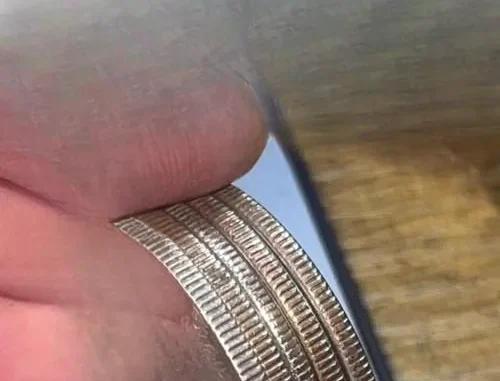
If you examine the edge of many modern coins—such as a dime or a quarter—you’ll notice a series of small, evenly spaced ridges. These ridges, often overlooked, have a rich historical background and serve important practical purposes beyond aesthetics. The story of ridged coin edges is deeply intertwined with the evolution of currency, economic stability, and the ongoing effort to maintain trust in money.
Historical Context: Currency as Physical Commodity
Before the widespread use of paper money and digital transactions, coins were valued primarily for the precious metals they contained, such as silver or gold. In the 17th and 18th centuries, the worth of a coin was directly linked to its weight and metal content. This system, while logical, created vulnerabilities because the intrinsic value of currency was tangible and could be altered.
One common form of tampering was "coin clipping," where small amounts of metal were shaved off the edges of coins. Although each individual clipping was minute and hard to detect, collectively, it resulted in significant loss of precious metal from the currency supply. Clipped coins continued to circulate as if they were whole, causing a reduction in the overall metal content backing the currency. This led to decreased confidence in money, market instability, and economic challenges.
The Challenge of Currency Integrity
The problem was not just criminal but systemic. Currency that could be altered without visible signs undermined public trust and complicated trade. Governments and monetary authorities faced the challenge of making coins tamper-evident to protect the value and reliability of currency.
Isaac Newton’s Role in Currency Reform
A notable figure in addressing these issues was Sir Isaac Newton, widely known for his contributions to science. During his tenure as Warden and later Master of the Royal Mint in England, Newton applied his analytical skills to combat counterfeiting and coin clipping. His approach was pragmatic and innovative.
The Introduction of Reeding
Newton helped implement the practice of adding patterned ridges, or "reeding," to the edges of coins. This design change made any tampering with the edges immediately apparent, as shaving the metal would disrupt the uniform ridges. As a result, coins became self-protecting objects, allowing everyday users to detect fraud without specialized tools.
Impact and Adoption of Ridged Edges
The introduction of ridged edges significantly reduced coin clipping and helped restore confidence in currency. This innovation spread widely and became a standard feature in many countries. Even as coins transitioned away from precious metals to base metals and symbolic face values, the ridged edges remained an important element of coin design.
Modern Functions of Ridged Coin Edges
Today, ridged edges serve several practical purposes beyond preventing clipping. They enhance security by helping machines verify the authenticity of coins. Vending machines, coin counters, and other automated systems use edge patterns, weight, and electromagnetic properties to distinguish genuine coins from counterfeits or foreign coins.
Moreover, ridges assist individuals who are visually impaired. The tactile difference between smooth and ridged edges allows for easier identification of coin denominations by touch, promoting independence in handling money.
Symbolism and Legacy
The persistence of ridged edges on coins symbolizes the ongoing relationship between physical currency and trust. They represent a design solution born from the necessity to combat fraud and maintain economic stability. Even as digital forms of payment grow in popularity, these small grooves remind us of the careful engineering behind everyday objects that we might otherwise take for granted.
Coins and the Future of Currency Design
With the rise of digital wallets, contactless payments, and cryptocurrencies, the role of physical coins is evolving. However, the principles underlying their design, such as security features and accessibility, continue to influence how money is conceptualized and protected.
Understanding the history and function of coin edges offers insight into broader themes of economic resilience and innovation. It illustrates how simple design changes can have lasting impacts on financial systems and daily life.
Practical Takeaways for Coin Users
Next time you handle coins, consider the ridged edges as more than a tactile feature. They are an integral part of a long history of efforts to safeguard the value of money. Being aware of such details also enhances media literacy regarding currency and its security features, helping consumers recognize authentic coins and understand the complexities of monetary systems.
In summary, ridged coin edges are a small but powerful example of how design, technology, and economics intersect. They reflect centuries of adaptation to challenges faced by societies in maintaining the integrity of their currency and continue to serve functional and symbolic roles in the modern world.
The Evolution of Coin Edge Designs Beyond Reeding
While reeded edges are the most common and widely recognized form of coin edge design, the practice of modifying coin edges has continued to evolve with advances in technology and changes in currency systems. Various countries have experimented with different edge patterns, such as lettering, milling, and segmented designs, to add additional layers of security and uniqueness to their currency.
For example, some coins incorporate inscriptions or decorative motifs on their edges, which serve as both aesthetic elements and anti-counterfeiting measures. These intricate details make it harder for counterfeiters to replicate coins accurately and provide collectors and users with distinctive features to identify authentic currency. The diversity in edge designs reflects ongoing efforts to adapt to new challenges in currency security while honoring cultural and national identities.
The Role of Coin Edges in Anti-Counterfeiting Technologies
In addition to their traditional deterrent role against clipping, coin edges have become integral components of modern anti-counterfeiting strategies. Technological advancements have enabled the integration of microscopic patterns, laser engraving, and complex edge lettering that are difficult to duplicate without specialized equipment.
These enhancements complement other security features such as holograms, embedded chips, and advanced metallurgical compositions. By combining tactile and visual elements, mints increase the layers of verification available to both machines and human users. This multi-faceted approach helps maintain confidence in physical currency, especially in an era where counterfeiters have access to increasingly sophisticated tools.
The Scientific and Engineering Challenges of Minting Edges
Producing coins with precise and durable edge patterns presents scientific and engineering challenges that require specialized knowledge and equipment. The minting process must ensure that ridges or inscriptions on the coin’s edge are uniform and resistant to wear, which could otherwise diminish their effectiveness over time.
Materials science plays a crucial role in selecting suitable alloys that balance durability with cost-efficiency. Additionally, the machinery used to strike coins must be finely calibrated to produce consistent edge details at high volumes. These technical considerations underscore the complexity behind what might seem like a simple design feature, highlighting the collaboration between engineers, metallurgists, and numismatists.
Cultural Significance and Collectibility of Edge Designs
Beyond their functional purposes, coin edges have become an area of interest for collectors and historians. Variations in edge designs can indicate different minting periods, special editions, or commemorative issues. Collectors often seek out coins with unique or rare edge patterns, adding a layer of cultural and historical value to these small details.
Studying edge designs can also provide insights into a country’s economic history, technological capabilities, and artistic preferences at various points in time. As such, coin edges contribute not only to monetary security but also to the preservation of cultural heritage.
Global Perspectives on Coin Edge Practices
Different countries approach coin edge design with diverse priorities based on their economic context, technological infrastructure, and cultural preferences. For instance, some nations emphasize intricate edge inscriptions to convey national mottos or historical references, while others prioritize simple ridges for practical security reasons.
Understanding these variations offers a broader perspective on how societies balance tradition, innovation, and security in their currency systems. It also highlights the interconnectedness of global economies, where counterfeit prevention and currency trustworthiness are shared concerns transcending borders.
Educational Value and Media Literacy in Currency Recognition
Educating the public about the features and functions of coin edges can enhance media literacy related to currency and financial security. Awareness of why ridges exist and how they function empowers individuals to recognize authentic coins and understand the importance of design in preventing fraud.
This knowledge can be particularly valuable in contexts where cash transactions remain prevalent or in environments where counterfeit currency poses significant risks. Public outreach and educational programs by mints, financial institutions, and consumer protection agencies contribute to informed and vigilant communities.
Looking Ahead: The Future of Physical Currency and Edge Design
As digital currencies and electronic payment methods continue to grow, the role of physical coins is evolving. However, coins are likely to remain in circulation for the foreseeable future, particularly in smaller denominations and in regions with limited digital infrastructure.
Future coin designs may incorporate advanced materials and smart technologies, such as embedded microchips or responsive surfaces, further enhancing security and functionality. Edge designs will likely continue to play a role in these innovations, providing tactile and visual cues that complement electronic verification methods.
Moreover, the symbolic importance of coin edges as a tangible link to monetary history and trust will persist, even as the nature of money changes.
Reader Takeaways: Appreciating the Subtle Complexity of Coins
The next time you handle a coin, take a moment to observe and feel its edge. What may seem like a minor detail is, in fact, the product of centuries of economic challenges, scientific innovation, and cultural expression. Ridged and patterned edges are silent guardians of currency integrity, enabling security, accessibility, and trust.
Recognizing the thought and technology behind these features enriches our understanding of everyday objects and the complex systems they support. It also provides a reminder that even the smallest design elements can have profound impacts on society and economy.
In conclusion, coin edges are a fascinating intersection of history, science, security, and culture. They serve as enduring symbols of humanity’s ongoing effort to safeguard the value of money, adapt to new challenges, and preserve trust in the systems that underpin daily life.
The Economic Implications of Coin Edge Security
The introduction of ridged and patterned edges on coins not only served to prevent direct physical tampering but also had broader economic repercussions. By helping to maintain the intrinsic integrity of coins, these design features supported greater monetary stability. When coins reliably represented their intended value, they facilitated smoother commercial transactions and reduced the risk of inflation or deflation caused by debased currency. This stability was particularly important in pre-modern economies where trust in physical money was fundamental to trade, taxation, and governmental authority.
Moreover, by mitigating losses from coin clipping, governments could better control money supply and reduce the costs associated with re-minting or recalling devalued coins. This had positive effects on fiscal policy and public confidence in state-backed currency systems. Thus, the seemingly small innovation of coin edge design contributed to the larger framework of economic governance.
The Interplay Between Tradition and Innovation in Coin Design
While the primary motivations behind ridged edges were security and functionality, coin design has always balanced tradition with technological progress. Many nations incorporate historical symbols, national mottos, or artistic elements onto coins, including their edges. This practice serves to reinforce cultural identity and national pride.
At the same time, advances in minting technology allow for increasingly sophisticated edge treatments that can incorporate fine details and microtext. These developments demonstrate how traditional craftsmanship and modern engineering coexist in numismatics. The edge of a coin thus becomes a canvas where history, art, and technology intersect, reflecting a society’s values and capabilities.
The Educational Role of Numismatics and Coin Edge Awareness
Beyond their practical applications, coins and their edge designs offer valuable educational opportunities. Numismatics—the study and collection of coins—encourages exploration of history, economics, metallurgy, and design. Educators can use coins to illustrate concepts such as the evolution of money, the importance of security features, and the impact of technological innovation on everyday objects.
Understanding coin edges can also enhance critical thinking about authenticity and trust, skills that are increasingly relevant in a digital age marked by misinformation and counterfeit goods. By fostering awareness of how mundane objects like coins are engineered for security and reliability, individuals gain a broader appreciation for the complexities underlying economic systems.
Preservation Challenges and Conservation of Coin Edges
The durability of ridged and patterned edges is essential for maintaining their security function over time. However, coins in circulation are subject to wear from handling, environmental exposure, and chemical reactions. Excessive wear can smooth edges, reducing their effectiveness as a tamper-evident feature.
Conservation efforts by collectors, museums, and mints aim to preserve coins in good condition, including edge details. Understanding the materials and processes that contribute to edge longevity informs storage and handling practices. Additionally, designing coins with resilient materials and edge features that withstand wear remains a priority for minting authorities.
This focus on preservation ensures that coins continue to serve their security and symbolic roles effectively, even after years of use.
The Role of Coin Edges in Global Economic Integration
As international trade and travel increase, coins circulate beyond their countries of origin, sometimes leading to challenges in distinguishing local currency from foreign or counterfeit coins. Edge designs contribute to the global recognition and differentiation of coins, helping both machines and people identify legitimacy.
Some multinational currency systems or economic unions adopt standardized edge features across member countries to facilitate acceptance and security. This harmonization reflects broader trends in economic integration and cooperation. Conversely, unique edge designs can also serve as expressions of sovereignty and national identity within a globalized monetary landscape.
In this way, coin edges participate in the dynamic balance between globalization and local distinctiveness.
Reader Takeaways: Reflecting on the Broader Significance of Coin Edges
The subtle ridges and patterns on coin edges are more than mere physical traits; they encapsulate centuries of human effort to secure economic trust and facilitate commerce. Recognizing the multifaceted roles these features play—from economic stabilization and security enhancement to cultural expression and educational value—deepens our appreciation of everyday objects.
In a rapidly digitizing world, the physicality of coins and their edges remind us of the tangible foundations upon which modern financial systems were built. Whether as tools for preventing fraud, aids for accessibility, or carriers of historical narrative, coin edges remain enduring symbols of innovation in service of societal needs.
Next time you handle a coin, consider the rich legacy embedded in its edge—a legacy of resilience, ingenuity, and the continual quest to uphold trust in the money that powers our lives.